I know we are all tired of the same old clunky academic conference poster, but folks are often unsure of where and how to break the rules and if it is even possible to do something different with the “Poster Presentation” genre. Instead of using …
My newest piece appears in Angelina Castagno’s gorgeous edited volume, The Price of Nice: How Good Intentions Maintain Educational Inequity. Before this project came along, I was relatively certain that I was done done DONE with my decades of work around workplace feminization and ethnographies …
I’m a university professor and a scholar and writer and ethnographer and all that stuff, but as an arts-based researcher, sometimes the Art part gets shoved off to the side and hidden away, especially when times are stressful or busy and I have a thousand papers to mark and a book chapter overdue and all kinds of straight work that seems to be ahead of art in the proverbial urgency queue. That’s why I love things like Inktober.
Jake Parker is the smarty pants behind the idea of #inktober— when illustrators all over the world are encouraged to draw something for every day of the month of October. The point of #inktober is to develop positive drawing habits, share your work with others on social media, and build a supportive community. Jake writes, “Inktober is just a framework to get yourself to draw better, flex a little, and/or have some fun with your art. Inktober is a challenge NOT a contest to see who the best artist is. It’s a challenge to see how much you can improve your art in a month, and to be inspired or to help inspire other artists to do the same.” Jake started the challenge in 2009, but this is the first year I have done it.
Now, I haven’t exactly followed all the rules. I’ve been traveling a lot and working on other projects so I haven’t always followed the prompts, I missed a day here and there, and I have only sketched by hand about half the time (I love working on my tablet, which I find very glossy and soothing). But I feel like I followed the spirit of the challenge: as a working artist with a serious day job that only sometimes involves art, drawing every day has been a fantastic way to stay connected with my work as an illustrator– and more importantly to connect with other artists and to remember what the hell I’m actually doing all of this arts-based researcher thing for. I’ve made friends, gotten a new contract or two (thanks, social media!) and even provided a design for a dear friend’s new tattoo! Drawing every day, just like writing every day, really does build up and sustain one’s creative chops.
I had a blast at the Qualitative Health Research Conference in Vancouver leading a fantastic workshop on comics in qualitative research and giving a keynote lecture. The Zine workshop was a longer version of my classic studio experience, tailored for a diverse group of researchers …
I was very excited to be attending and presenting a work-in-progress paper at the Oxford Ethnography and Education conference this coming week at New College, Oxford University. This conference is a highlight of my year: It’s a chance to workshop and improve a paper while …
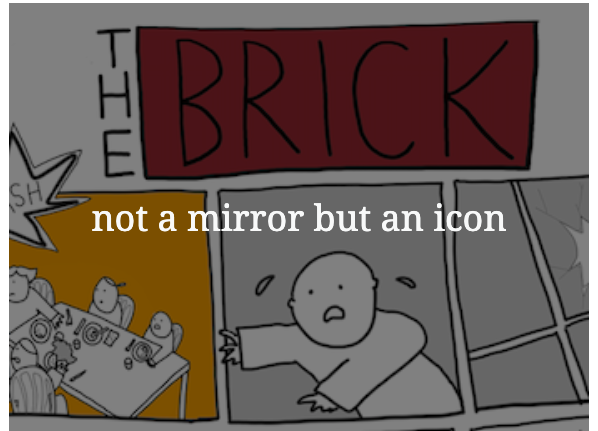
As Sonya Atalay writes in the introduction to our collaborative, creative collection in American Anthropologist, “In our hypervisual culture, presenting research in a visually engaging way can have a powerful and democratizing impact. Visual methods, such as comics and animation, aid us in telling engaging, memorable stories about our work. Storytelling is an important skill in the research tool kit; it brings much-needed creativity to our work lives and to our research while at the same time helping to democratize knowledge and fulfilling our ethical responsibilities to share scholarship outside the academy . . . In different ways, we each present drawing and visual our research to others beyond our discipline. Several of us use these forms of creative work as teaching tools. Discussing creative process and sharing our visual pieces, we present a range of ethnographic work, including a new graphic narrative focused on NAGPRA law and Native American repatriation, drawings used as reflexive practice, comics that help us grapple with uncomfortable data and fieldwork experiences while resisting the urge to reduce complexity, lessons about how graphic novels can be both an object of analysis and a product in a class on violence studies, and students’ experiences learning in class how to translate their research about Indigenous peoples and heritage into comics.We close with a discussion of several key themes that we recognize winding through these diverse approaches to creating research-based graphics and visual work” (Atalay et al, 2019, p. 769).
In this collection I get to appear alongside the brilliant Sonya Atalay, who organized our panel and my performance at the Anthropology meetings a few sessions ago, as well as John Swogger, Letitzia Bonnanno, Sarah Jacqz, Ryan Rybka, Jen Shannon, Cary Speck and Erica Wohlencheck. Not only am I so honored to appear alongside my esteemed colleagues, I am thrilled to be a part of this very different sort of publication. As cartoonists and other artists try to reach new and diverse publics with our material, linking to longer and more in-depth visual material — as this piece does– represents an innovation in printed form.
Galman, S. C. (2019). Not a mirror, but an icon: Ethnographic comic art in three acts. In, Atalay, S., Bonanno, L., Galman, S. C., Jacqz, S., Rybka, R., Shannon, J., Speck, C., Swogger, J., & Wolencheck, E. (Contributors), Ethno/graphic storytelling: Communicating research and exploring pedagogical approaches through graphic narratives, drawings and zines. American Anthropologist,121 (3), 769-770.
The only thing better than being invited to the University of Pittsburgh is being asked to speak in the Cathedral of Learning, and the only thing better than that is to know that there will be tea and cookies! Come one come all!
Laura and I were contemplating our very last year as Editors in Chief of AEQ when we realized that we were ending our watch on volume 50! Wow! Our Note from the Editors reflects our interest and innovations in publishing creative work, and we hope …
An oldie but goodie, my conversation with Dr. Kakali Bhattacharya. Food for thought as we all wrestle with what it means to be scholars and writers in the cold and quiet of the winter semester. We had a great time, and you can watch it here: https://youtu.be/SD_ydK58MuM
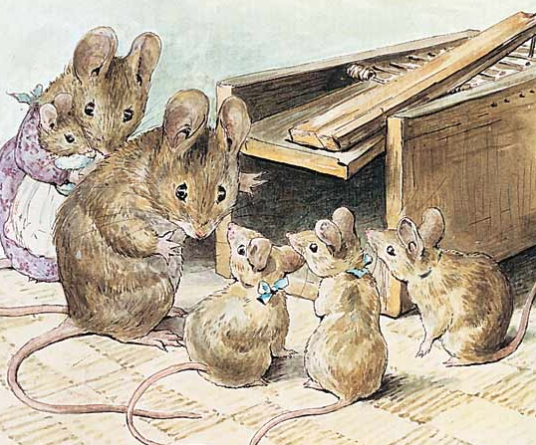
At long last, I am an actual, bonafide, legit, published poetess! I am over the moon. My poem, Mouse Nest, is an example of ethnographic poetry. As Cahnmann and Maynard (2010) write, Poetry is one important place where ethnographers can explore tensions thatemerge between the …