Chancellor’s Leadership Fellow, 2026–27
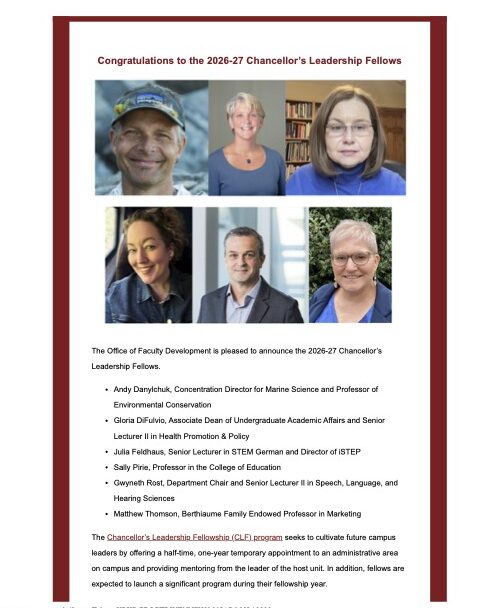
I’ve been in the business of making room for unruly scholarship for most of my teaching and research career, but now I get to do it on a much larger scale. I’m spending this year as a 2026–27 Chancellor’s Leadership Fellow — one of six faculty at UMass Amherst given a half-time, year-long appointment inside an administrative unit, with a mentor and a mandate to build something innovative, useful and nimble. My unit is the Commonwealth Honors College, and my mentor is Dean Mari Castañeda, who is both a gifted leader and administrator in addition to being an amazing scholar. She is the kind of academic and leader I would like to be one day.
My brief, as I pitched it, was about finding ways to make creative scholarship easier to do, not just easier to admire. The Honors College already offers a Creative Portfolio thesis option alongside the conventional research manuscript. Both are fantastic options, but the problems of doing creative work in a world that is increasingly phantasmagoric, to quote Anthony Giddens (1990), loom large. Modern higher education is undergoing a quiet but drastic mutation. In a relentless pursuit of short-term economic metrics, universities are rapidly transforming into corporate vocational schools. As institutions increasingly prioritize STEM fields and hyper-specialized professional programs, the humanities and fine arts are systematically being starved of funding, marginalized, and phased out. This shift is not progress; it is an intellectual and cultural impoverishment that operates to everyone’s detriment. Higher education was never meant to be a simple assembly line for corporate labor. It was designed to foster a vibrant, multi-disciplinary ecosystem where scientists, artists, philosophers, and engineers challenge, humanize and inspire one another. And the good news is we do not have to choose—we can have that multi-disciplinary ecosystem—arts-based research shows us how it can be done, and beautifully at that.
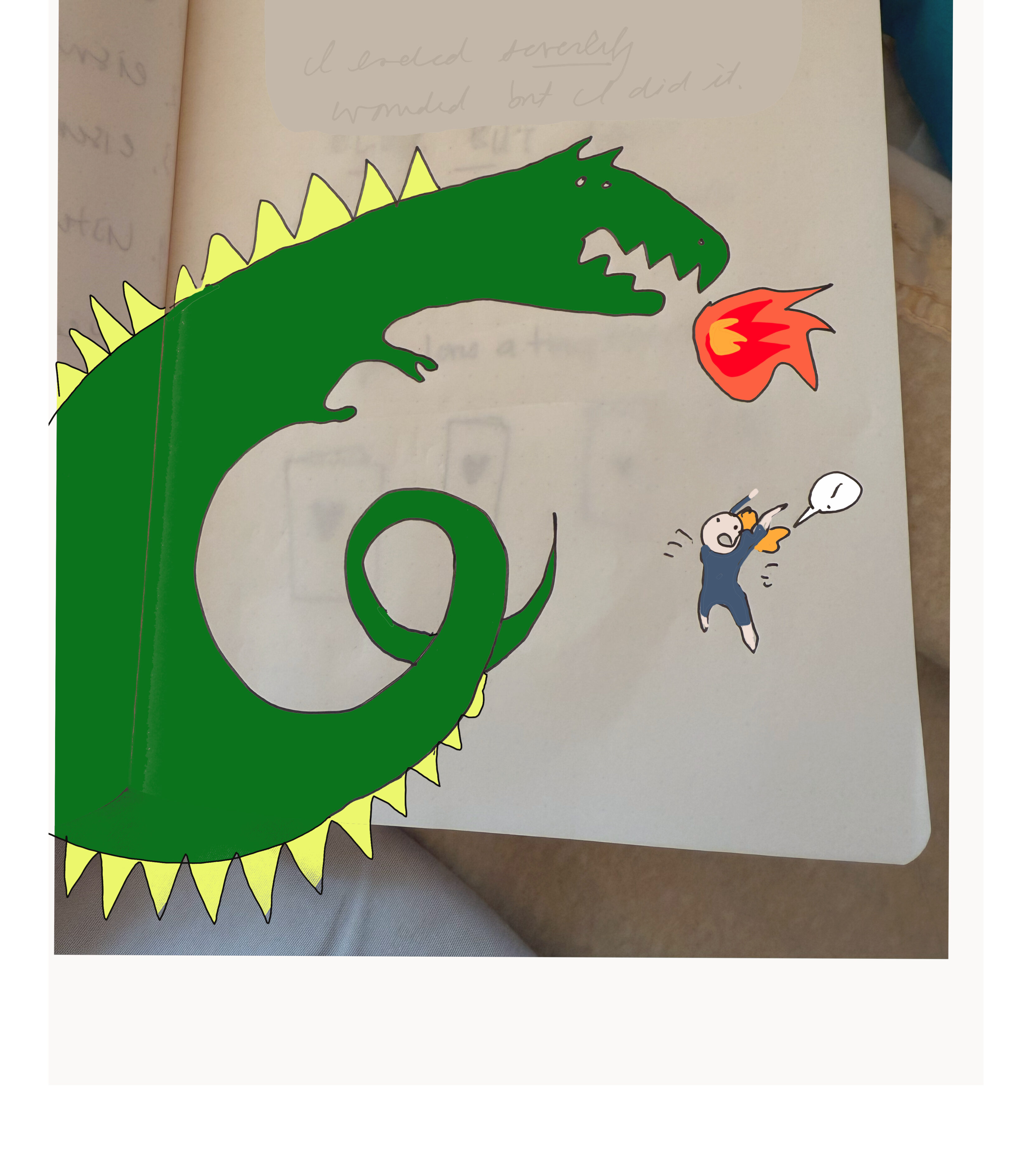
So, given what we are up against, it’s nobody’s fault that the creative portfolio can feel nebulous, like double work, and examples are sometimes tricky to access. And faculty are up against it too; they are often asked to sponsor work they’ve never been given room to try themselves.
So the project has two halves that turn out to be related. For students, I’m teasing apart what the support system can look like and imagining a space a little bit like my CBR Lab model: a space where undergraduates, graduate students, and faculty work in mutually supporting teams with works-in-progress sessions, guest speakers, mini-conferences, a home base for finishing things that doesn’t pile-on. Scoping templates, a sponsor’s kit, an archive of exemplars — the unglamorous infrastructure that lets a bold idea survive contact with a semester. Most of this is already in place!
For faculty, the wager is blunter: you cannot mentor what you have never been allowed to play at. So the brainstorming starts low-stakes and hands-on — especially for colleagues outside the arts and humanities, in STEM, the social sciences, business, health, and education — on the theory that a professor who has made something small and strange of her own will be braver, and better, at sponsoring (and supporting, and advising, and collaborating with!) a student doing the same. And again, the trick to all of this is not having it be a moment of intensification, but rather the synergistic gift that actually contributes to the faculty member’s own research, productivity and joy.
I arrived with a learner’s (and an ethnographer’s!) agnosticism: listening first, doing lots of the ethnographic art of hanging out, learning what folks need (nobody wants anything superimposed!) and going from there. But the conviction underneath my starting impulses isn’t agnostic at all: I believe supporting creative research and divergent thinking is essential to a responsive, humanizing, dynamic university — and that nimble, arts-based, unconventional scholarship isn’t a side dish of superfluous fluff. Done right, it can be the main course.
