Why Yes Of Course The Velveteen Rabbit Is Actually About Anthropological Research
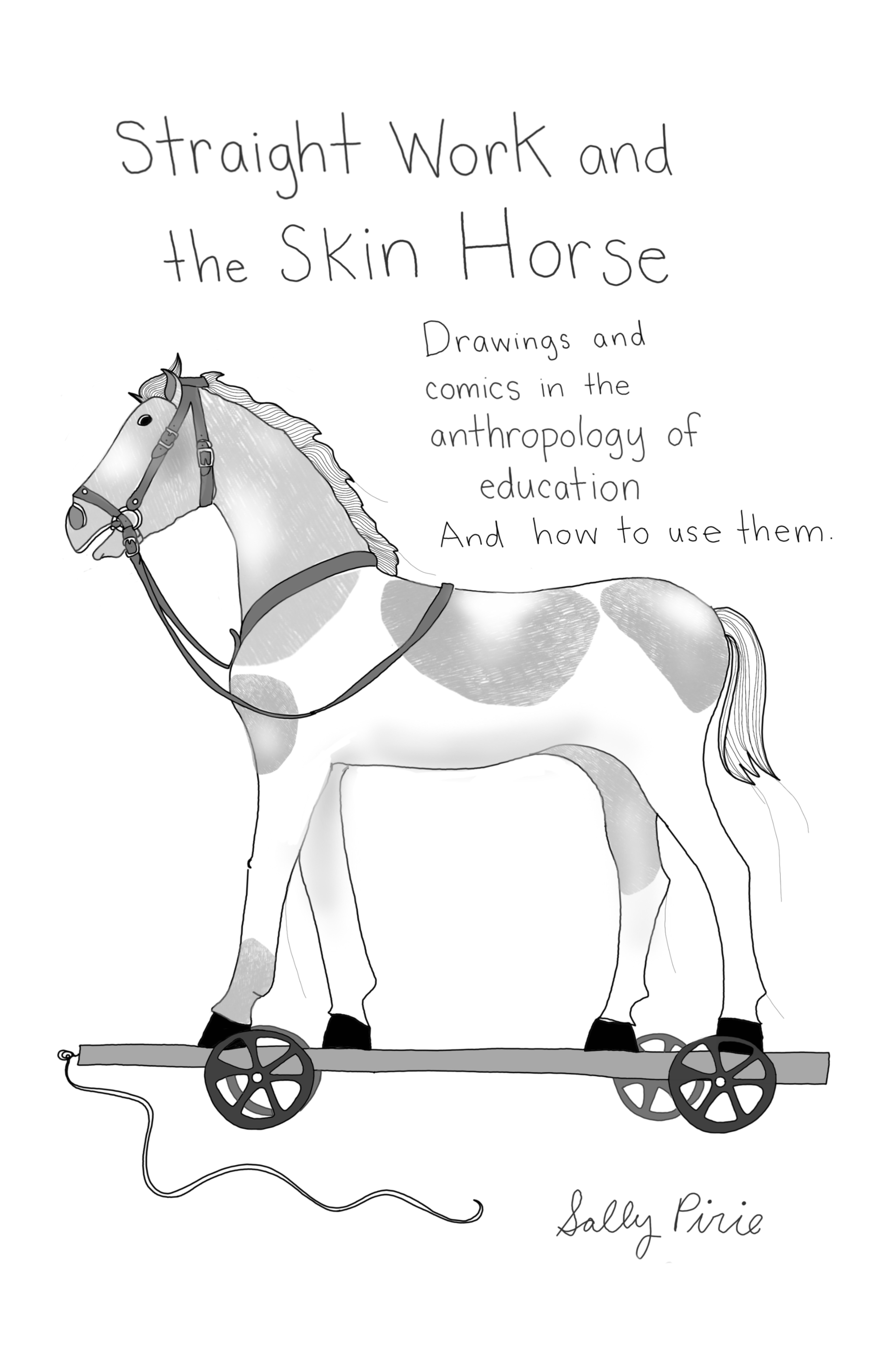
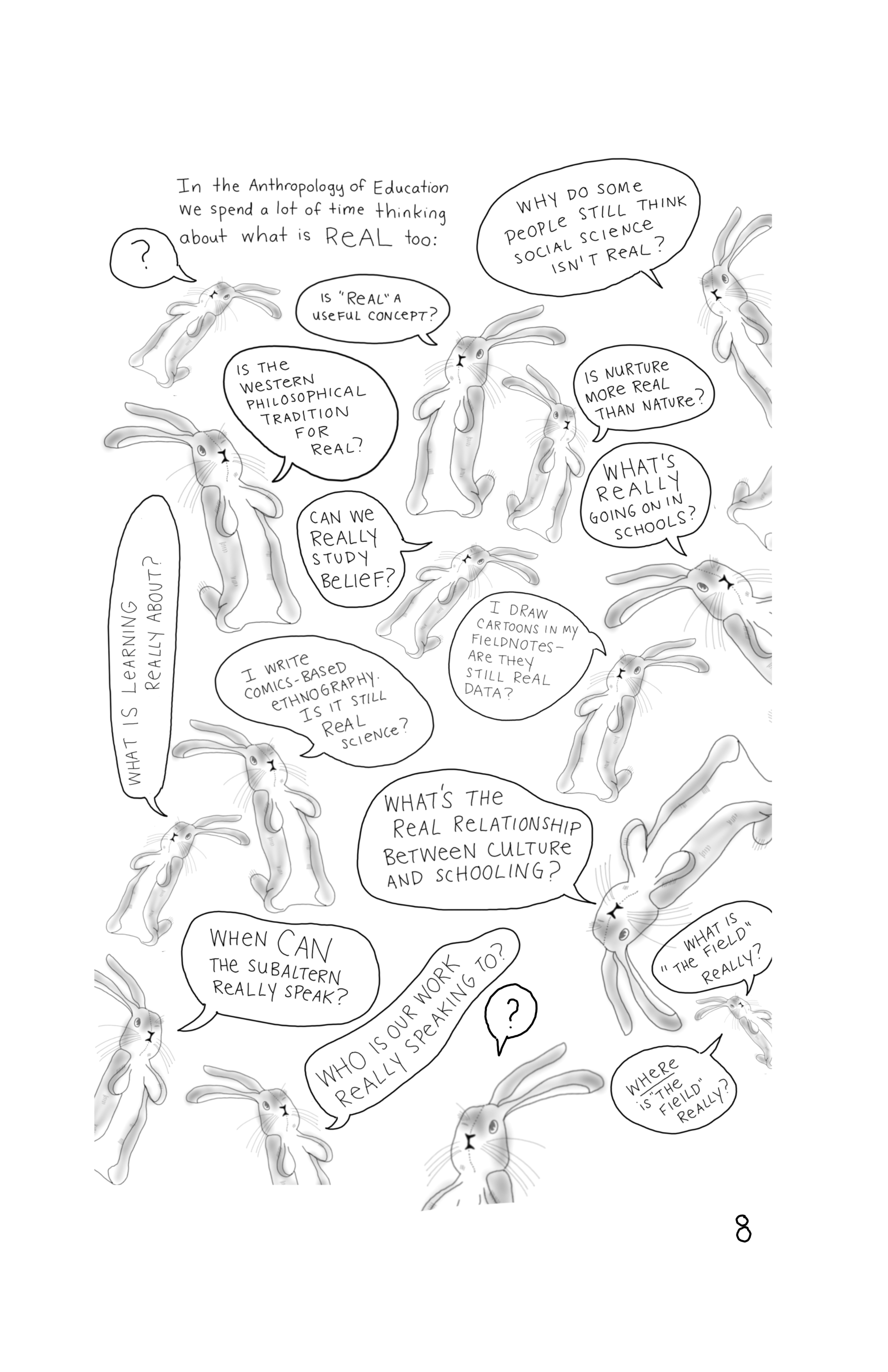
It’s always fun when, late in the summer, just when we are starting to feel the dread/excitement/thrill/terror of the coming fall semester, something delightful appears in your email inbox. Today I learned that my newest publication was out—this time starring lots of velveteen rabbits and the skin horse, which were fun to draw and also ekphrastically necessary for the message of the text.
This chapter appears in Margaret Eisenhart’s beautiful edited volume from Edward Elgar titled, Research Handbook on the Anthropology of Education: Practices and Methods. You can learn more about it here.

My contribution,“Straight work and the skin horse: Drawings and comics and how to use them in the anthropology of education,” like any piece of CBR scholarship, took bloody forever to draw. Like, forever. Wesley Osum says making comic art is like dragging oneself up a hill, a hill upon which one might imagine the delights of just writing something in Microsoft Word, the simplicity of typing, the ease of text. However, I keep drawing because I believe this is the best and most useful way I can communicate the worlds of culture, science and inquiry. And as always when producing this kind of work, I’m constantly learning about new ways to improve my craft—usually mid-draft. So, it was fortunate that Margaret and the people at Edward Elgar were incredibly patient.
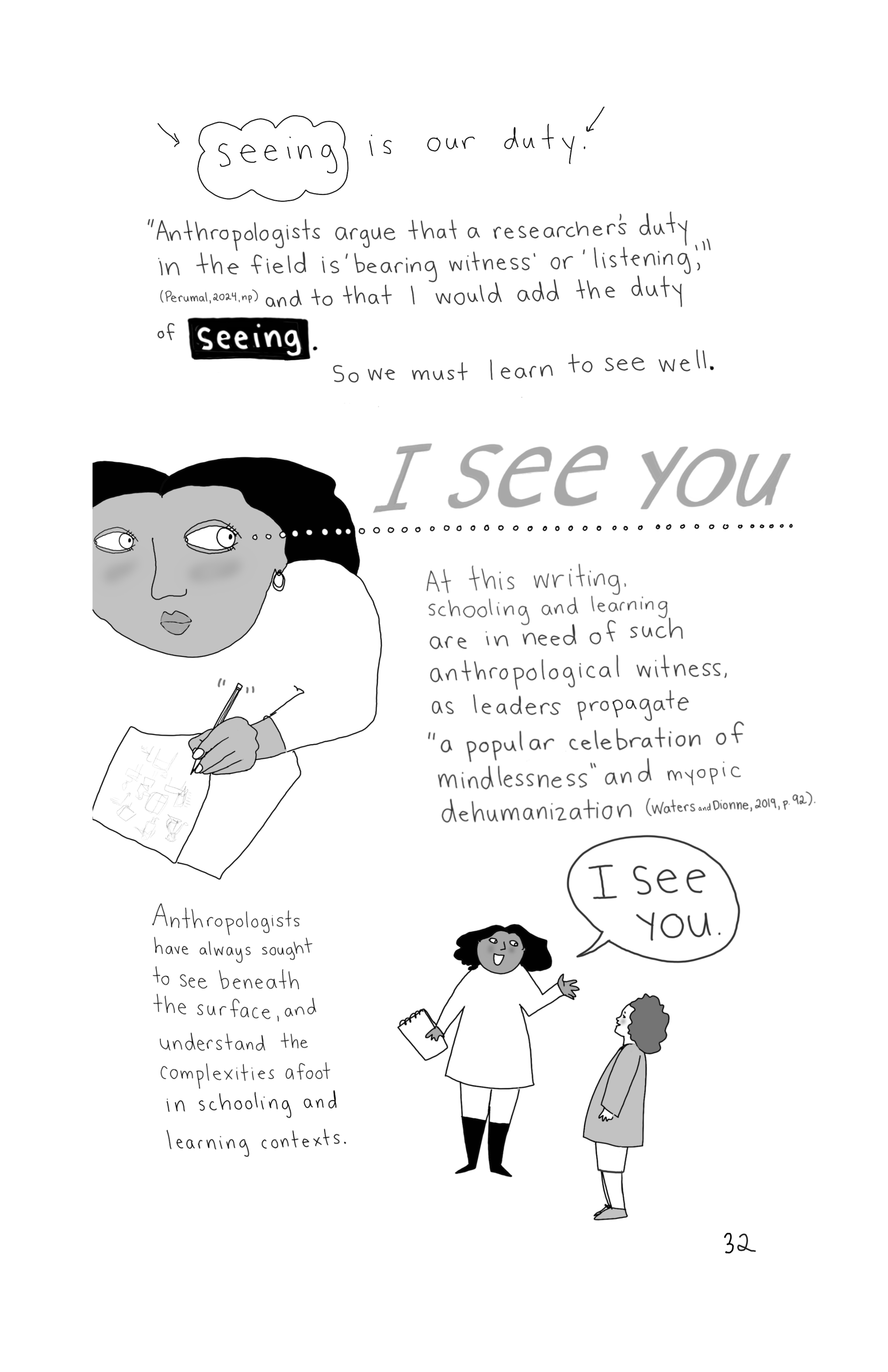
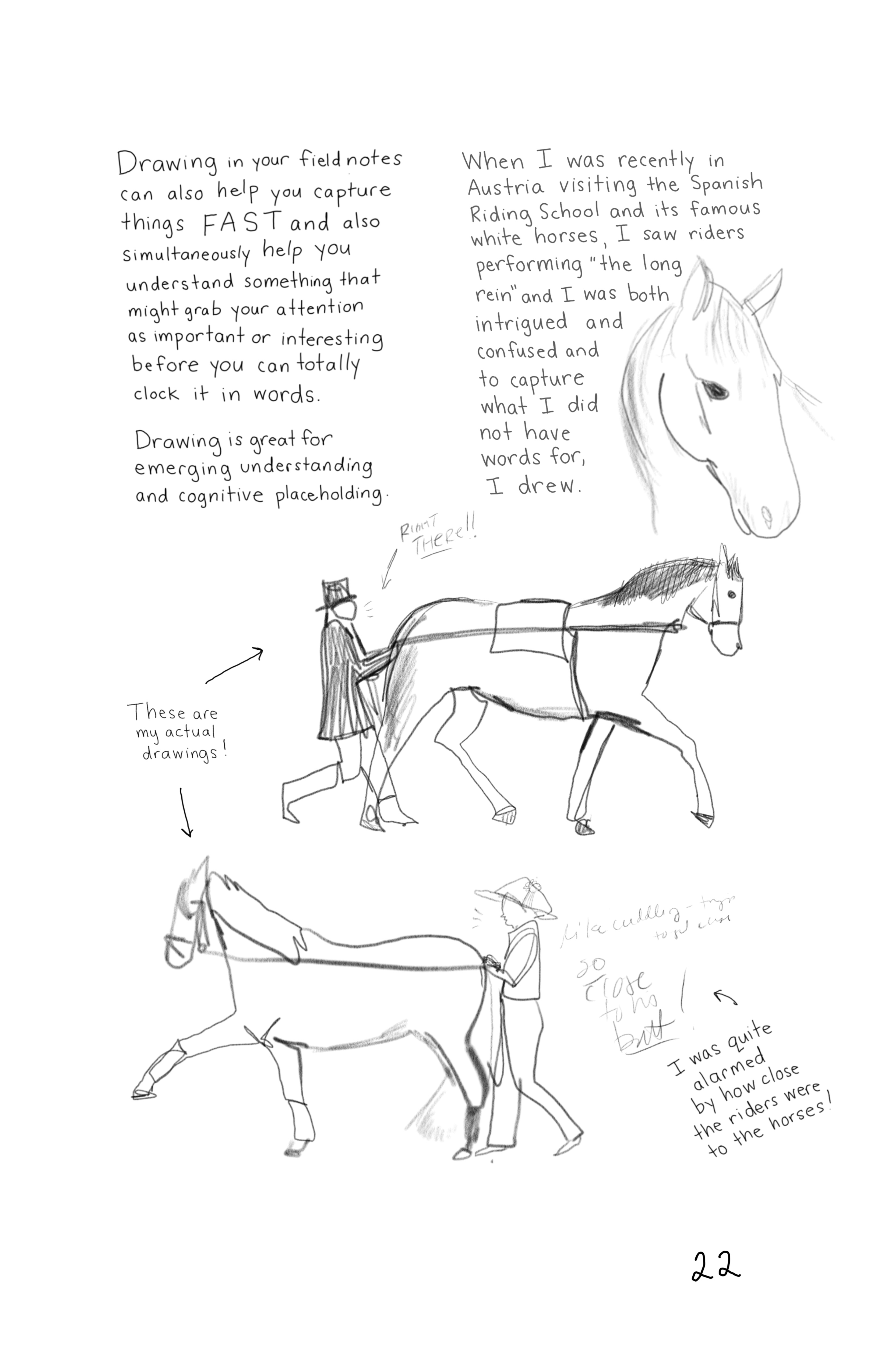
The chapter itself is about how to do comics-based research and drawings in anthropological research, and specifically in the anthropology of education. I make the distinction between looking and seeing, between the work and the job, between the ‘real’ and the performative, and the whole idea of side hustles and straight work masquerading as ‘real scholarship’ while the art, the drawings, the fieldwork doodles and the comics-based approaches are equally if not more real. The skin horse from the doomed nursery presides over the proceedings, reminding us of the real. And of course there are pages and pages of examples of how you might explore using drawings in your fieldwork, and lots of different entry points for beginners and master artists alike. I loved writing this piece—it brought together things I have been thinking about for a long time and gave me the opportunity to explore how these ideas fit into the histories and contemporary practices of anthropology.
The book itself is crazy expensive–so ask your librarian to purchase it for your institution! And, here are a few tasty previews of my chapter to tide you over in the meantime: